
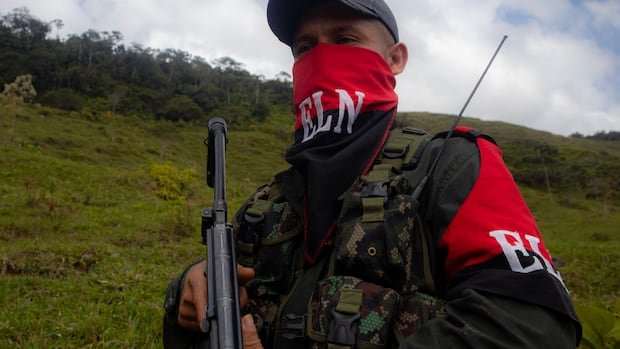

A recent U.S. assault on Venezuela has triggered changes in the activities of guerrilla factions along the Colombia-Venezuela border, causing concerns about potential betrayal by Venezuelan officials and the escalation of conflict if U.S. troops become involved, according to local security analysts. Following the attacks on January 3, reports have emerged of heightened guerrilla movements on both sides of the border. The National Liberation Army (ELN), the dominant guerrilla group in the region, has reportedly shut down some camps in Venezuela due to fears of their locations being exposed to U.S. authorities by Venezuelan regime members.
Jorge Mantilla, an expert on armed conflicts and national security in Bogotá, mentioned that the ELN is reorganizing its security measures and reviewing social control systems in Venezuelan communities where their leaders are stationed. Additionally, the ELN has halted training activities in Venezuela and postponed the establishment of a special forces unit with Venezuelan military support.
Anticipating a U.S. intervention in Venezuela, Mantilla highlighted that the ELN had previously expressed concerns about potential attacks over Venezuela’s resources. In 2019, the ELN warned former Venezuelan President Nicolás Maduro about traitors within the Venezuelan military, as intercepted by Colombian intelligence.
The recent events have raised the possibility for the ELN to expand its influence beyond Colombia and Venezuela, aiming to become a continental guerrilla force if the U.S. military intervenes in Venezuela or if internal factions emerge within the Venezuelan regime. Ivan Mordisco, a leader of a splinter group from the Revolutionary Armed Forces of Colombia (FARC), has called for unity among guerrilla groups and the Venezuelan military against U.S. intervention.
However, Gerson Arias from Colombia’s Ideas for Peace Foundation expressed skepticism about Mordisco’s credibility and highlighted his criminal status as a hindrance to forming alliances. The Colombian government has issued a substantial bounty on Mordisco’s head.
The ELN, operating in Colombia and Venezuela with an estimated force of 6,000 to 8,000 members, controls vast borderland areas and has no incentive to engage in peace talks with Mordisco’s group. The ELN’s activities in southern Venezuelan states involve illegal mining and drug trafficking for revenue generation. The group’s historical ties with the Venezuelan regime date back to Hugo Chávez’s presidency, aligning with Venezuela’s political ideology and supporting the defense of the country’s Bolivarian Revolution.
In a bid to combat the ELN, U.S. President Donald Trump and Colombian President Gustavo Petro have agreed to collaborate, with Petro scheduled to visit the White House soon. However, human rights advocate Eliana Paola Zafra from Cúcuta, Colombia, emphasized the need for a comprehensive peace strategy empowering Latin American communities to safeguard human rights and peace.