
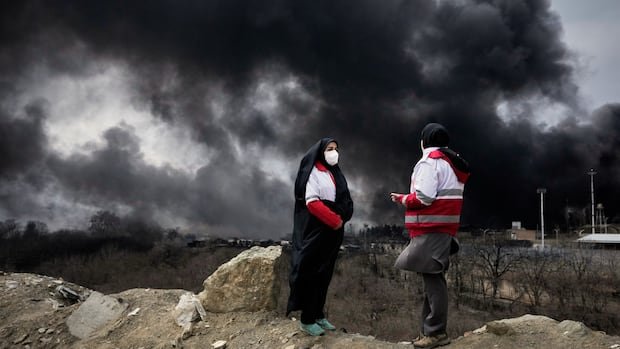

Experts warn that Israeli attacks on oil facilities in and around Tehran could have serious health and environmental consequences, affecting water and food sources long after the initial damage dissipates.
The World Health Organization (WHO) raised concerns on Tuesday regarding the presence of harmful pollutants in the air following the strikes on four oil storage sites and an oil production transfer hub, which resulted in massive flames and thick, black clouds leading to the formation of black, oily rain.
Residents in the densely populated city of 10 million reported respiratory difficulties, dizziness, and burning sensations due to the black rain mixed with chemicals from the burning oil falling from the sky.
WHO spokesperson Christian Lindmeier emphasized the risk posed by the black and acidic rain, particularly to respiratory health.

The UN health agency has received multiple reports of black rain post the attacks, prompting Iran’s advisory for people to stay indoors to avoid the potential health risks.
The Iranian Red Crescent Society cautioned that the rain could result in severe lung damage and chemical burns on the skin.
‘Highly Hazardous’
According to Peter Ross, a pollution expert and senior scientist at the Raincoast Conservation Foundation in Sidney, B.C., petroleum mixtures contain numerous toxic components, such as benzene, which carry significant health risks.
Ross highlighted the potential for severe and long-lasting consequences due to the dispersion of toxic gases into the air during fires, posing acute health risks to individuals by causing dizziness, loss of consciousness, and even fatality.
Ross mentioned reports of individuals experiencing burning sensations in their eyes, indicating the presence of sulfur and nitrogen oxides from the fires, reminiscent of acid rain incidents in past decades.
He expressed concerns about potential carcinogenic compounds in the environment, raising alarms about long-term health implications, especially as petroleum pollutants contaminate water sources.